A note about this article: The opening scene is an illustrative fictional scenario, not a real client account or a claim about a particular couple. The practical guidance below is general information, not a diagnosis or a substitute for professional care.
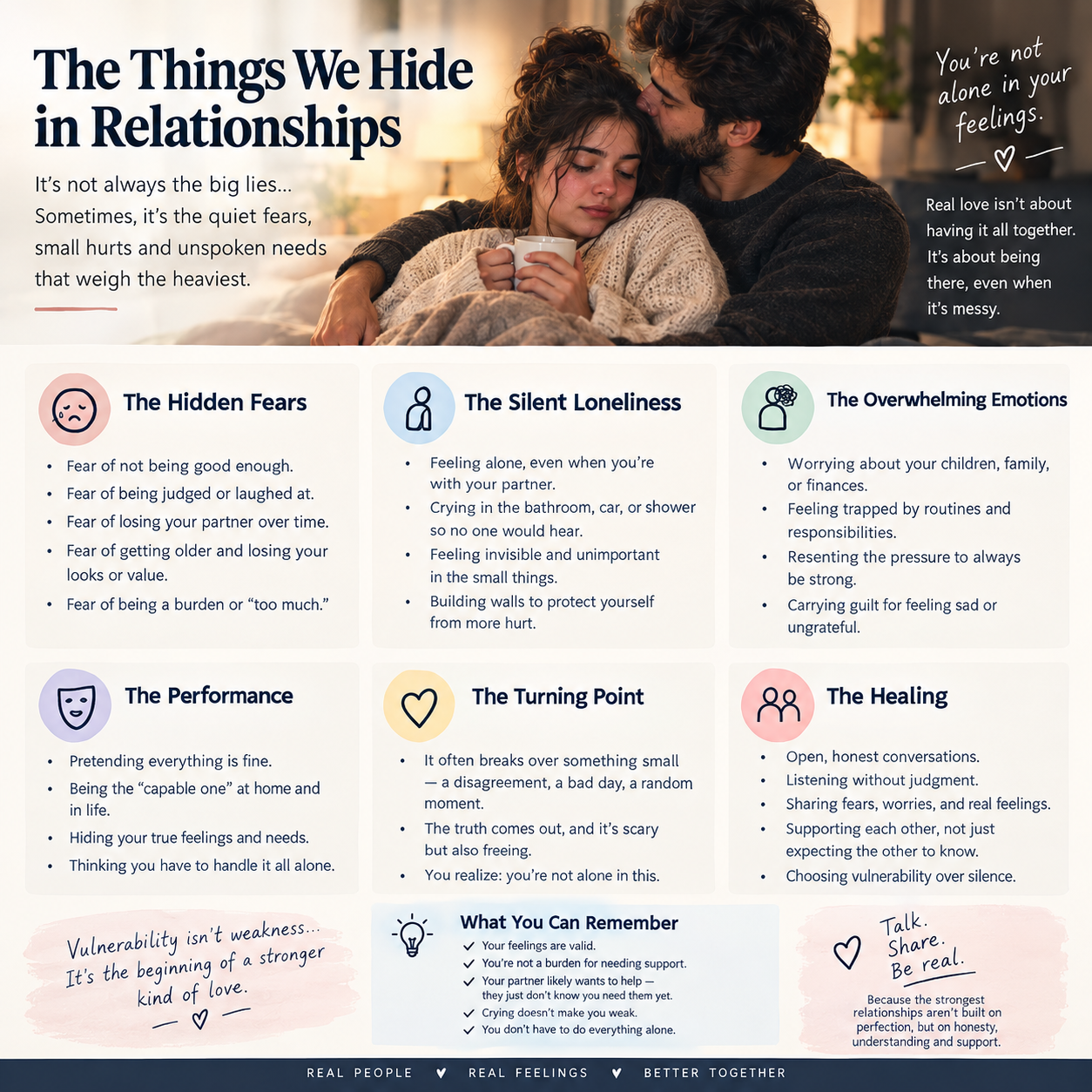
The house is finally quiet. The dishes are done, the children are asleep, and your spouse is only a few steps away. Yet there is a heaviness in your chest that you cannot seem to explain. You go into another room, turn on the tap or the shower, and let yourself cry where nobody will ask questions.
Perhaps you are not crying because of one dramatic argument. Perhaps it is the accumulation of small moments: a conversation that never happened, a concern that was brushed aside, a difficult day that passed without anyone asking how you were, or the feeling that your responsibilities are visible but your emotions are not.
If this sounds familiar, you are not automatically ungrateful, over-sensitive or a bad husband or wife. Emotional loneliness can happen even when two people love each other and live under the same roof. It deserves attention rather than shame.
This guide explores what crying alone in marriage can mean, why emotional distance develops, how to start a difficult conversation, what both partners can do differently, and when outside support may be useful. It does not assume that every marriage can or should be repaired: respect, consent and personal safety matter throughout.
1. What does crying alone in marriage actually mean?
Crying alone in marriage is not a formal diagnosis. It is a way people describe a painful experience: having emotions that feel too difficult, unsafe or exhausting to share with the person from whom they most want understanding. The tears may come from loneliness, grief, stress, disappointment, fear, exhaustion or several feelings at once.
It is important to separate being physically alone from feeling emotionally alone. A person may spend every evening beside their spouse and still feel that meaningful parts of their inner life have no place in the relationship. They may talk about bills, meals, school runs and appointments but rarely discuss worries, hopes, affection or personal disappointments.
Emotional connection does not require a couple to agree on everything or talk deeply every hour. It means that both people generally have room to speak honestly, be treated with respect and receive some effort to understand what matters to them. Healthdirect describes healthy relationships as involving safety, respect, honest communication and the ability to work through problems together. Read its guide to building and maintaining healthy relationships.
2. Why does emotional loneliness develop in a marriage?
There is rarely one explanation that fits every couple. Emotional distance can grow gradually as partners respond to pressure in different ways. One person may want to talk immediately, while the other withdraws to avoid an argument. Both may be trying to cope, but each can interpret the other's response as rejection.
Unspoken needs become repeated disappointments
One partner may hope the other will notice exhaustion, offer affection or ask about a difficult day without being prompted. When that does not happen, the disappointment can feel personal. The other partner may not realise what is being expected. Over time, both can become frustrated: one feels unseen, while the other feels criticised for failing to guess correctly.
People cannot reliably read one another's minds, even after many years together. A need that matters should be expressed as clearly and kindly as possible. “I would feel supported if we shared the evening chores” gives your spouse something understandable to respond to; “You never care about me” usually leaves both people defending themselves.
Daily responsibilities replace meaningful conversation
Work, childcare, household tasks, commuting, financial pressure and caring for relatives can turn a relationship into a management partnership. Conversations become lists of what must be done. Practical teamwork is valuable, but it cannot always replace warmth, curiosity and time spent together without an agenda.
Old arguments never receive a proper repair
Some couples stop discussing painful subjects because every attempt becomes an argument. The subject disappears from conversation but not necessarily from memory. A person may continue carrying the hurt long after the disagreement has ended. When similar incidents happen again, the reaction can be much stronger than the latest event appears to justify.
Different ways of handling stress create distance
Under pressure, one person may become quiet and need time alone; another may seek reassurance and conversation. Neither response automatically means a lack of love. The difficulty begins when partners do not explain what is happening. A short sentence such as “I am overwhelmed and need half an hour; I do want to come back and talk” is more reassuring than disappearing without explanation.
Life changes alter the relationship
Becoming parents, moving to another country, losing a loved one, changing jobs, illness, financial uncertainty or children leaving home can change what each partner needs. A couple may continue using the habits that worked years ago even though their circumstances have changed. Emotional closeness sometimes needs to be rebuilt for a new stage of life.
There may be an individual mental-health concern
Persistent sadness is not always caused by a marriage. Depression, anxiety, grief, burnout, sleep problems and physical health concerns can affect mood and relationships. It is possible for someone to feel emotionally low even when their spouse is caring and supportive. Avoid diagnosing yourself or your partner from a blog post. If symptoms persist or affect daily life, speak with a qualified healthcare professional.
3. Signs that you may be emotionally disconnected
One difficult week does not establish a pattern. Look instead at what has been happening repeatedly and how it affects you. Possible signs include:
- You edit your feelings before speaking. You repeatedly decide that your worries are too small, too complicated or likely to cause an argument.
- You share information but not emotion. You can discuss schedules and expenses, but find it difficult to say that you are frightened, disappointed or lonely.
- You feel unheard after conversations. Your spouse may respond quickly with advice, explanations or criticism before you feel they have understood the issue.
- You stop reaching out. You no longer suggest time together because previous attempts felt disappointing.
- Small moments carry unusually large pain. A forgotten promise or distracted response brings up a much older feeling of not mattering.
- You act fine in public and fall apart in private. You maintain the household routine while hiding how distressed you feel.
- Affection feels mechanical or absent. Physical closeness may continue, but tenderness, curiosity and emotional reassurance feel limited.
These signs are prompts for reflection, not a checklist for labelling your spouse. Ask yourself: “What exactly am I missing? When do I feel most alone? What would a small, observable improvement look like?” Specific answers make a conversation more useful than a general accusation.
Realistic everyday examples: what emotional loneliness can look like
The following short scenarios are illustrative examples created to explain common relationship patterns. They are not presented as verified MatchFusion clients, interviews or documented case studies. Real couples have different circumstances, and no single example can explain every marriage.
Example 1: The couple who only discuss household tasks
Imagine Ayesha and Hamza, a fictional couple with busy workdays and two school-age children. Their conversations mostly cover school fees, groceries, transport and family visits. When Ayesha tries to talk about a stressful day, Hamza immediately starts suggesting solutions. He believes he is helping; she experiences the quick advice as a sign that he does not want to hear her feelings.
What may be happening: Their practical teamwork is functioning, but emotional conversation has become rare. Neither partner may intend to create distance. Their different expectations about listening are causing repeated disappointment.
A useful first step: Ayesha could say, “I appreciate that you want to solve things. Sometimes I need you to listen for a few minutes before we look for an answer.” Hamza could ask, “Would you like comfort, advice or help with something practical?” They can then try a short daily check-in without phones.
Example 2: The spouse who stays quiet to avoid another argument
Consider a fictional couple, Sara and Bilal. Whenever Sara raises a concern about how family responsibilities are divided, Bilal hears it as criticism and becomes defensive. Sara begins keeping quiet because she wants to avoid tension. After several months, she finds herself crying privately over issues she no longer feels able to discuss.
What may be happening: A repeated pursue-and-withdraw pattern may be developing: one partner raises an issue more urgently, while the other withdraws, which makes the first partner feel even less heard. This pattern can continue even when both people want less conflict.
A useful first step: They could choose one calm topic rather than revisiting every past disagreement at once. Sara can describe one specific task that feels unfair and request a clear change. Bilal can reflect back what he heard before explaining his own view. If conversations regularly become intimidating or unsafe, individual professional support is more appropriate than forcing a joint discussion.
Example 3: Missing family while building a life abroad
Imagine Mariam and Usman, a fictional couple who have moved overseas for work. They are managing rent, long working hours and childcare without nearby relatives. Mariam misses her parents and feels isolated; Usman is also under pressure but tends to keep his worries to himself. Both assume the other is coping better, so neither asks for support.
What may be happening: Relocation stress and reduced social support may be adding pressure to the relationship. The sadness is not necessarily evidence that the couple has stopped caring about each other.
A useful first step: They can name the pressure openly, plan regular calls with family if those relationships are supportive, and make one manageable local connection or shared activity. They can also discuss how to divide responsibilities during especially demanding weeks.
Example 4: When crying may be about more than the relationship
Consider a fictional person who has been tearful for weeks, has stopped enjoying hobbies, struggles to sleep and feels exhausted even on quieter days. Their spouse is supportive, but reassurance alone does not make the sadness disappear.
What may be happening: Persistent low mood can have several causes and should not automatically be blamed on a marriage. A health professional can assess the person's symptoms and discuss appropriate support.
A useful first step: The person can arrange an appointment with a qualified healthcare professional and tell someone they trust what has been happening. If there are thoughts of self-harm or immediate danger, urgent local help is needed.
What these examples show: Emotional distance can grow from different communication habits, unshared responsibilities, life stress or personal wellbeing concerns. The helpful response depends on the actual cause. Start by understanding the pattern rather than assuming blame.

4. How to tell your husband or wife that you feel alone
The first conversation does not need to solve the whole marriage. Its purpose can simply be to let your spouse understand what has been happening inside you. Choose a moment when neither of you is rushing, exhausted or already arguing. If privacy is difficult, agree on a walk or another suitable time when you can speak without interruption.
Step 1: Begin with your experience, not a character judgement
Try to describe what you feel rather than defining what your spouse is. Compare “I have been feeling distant from you lately” with “You are a selfish partner.” The first sentence opens a subject; the second invites a defence. This does not mean hiding serious behaviour or pretending that harm is acceptable. It means being precise about the issue you want to discuss.
Step 2: Give one or two examples
General statements such as “You never listen” are difficult to act on. A specific example gives context: “When I tried to tell you about my day yesterday and we both stayed on our phones, I felt unimportant.” Describe the event as accurately as you can, without guessing your spouse's intentions.
Step 3: Explain what would help
A request should be realistic and observable. For example:
- “Could we have fifteen minutes after dinner without our phones?”
- “When I share a worry, could you listen first and ask whether I want advice?”
- “I would like us to plan one small activity together this weekend.”
- “Can we discuss the household responsibilities and divide them more fairly?”
Step 4: Give your spouse room to respond
Your partner may feel surprised, guilty, defensive or sad. Their first response may not be perfect. If the conversation remains respectful, allow them to explain what they have experienced too. Listening to their perspective does not cancel yours. The goal is to understand the pattern from both sides and decide what each person can change.
Step 5: Agree on one next step
End with something small enough to try. “Let's check in on Sunday evening and see whether our phone-free conversations helped” is more actionable than “We must never feel distant again.” Change is usually easier to maintain when expectations are clear and progress can be discussed honestly.
“I am not asking you to fix every feeling tonight. I want you to understand what I have been carrying, and I want us to work out one way to feel closer.”
For further practical communication guidance, see the Better Health Channel's guide to relationships and communication. It discusses clear expression, listening, non-verbal communication and dealing with conflict.
5. If your spouse opens up, how should you respond?
Hearing that your partner feels lonely can be painful. You may think, “I work hard for this family,” “I did not know,” or “Why did you not tell me earlier?” Those feelings may be real, but responding with them immediately can make your partner regret speaking.
Start by trying to understand. You do not have to agree with every detail to acknowledge that the feeling is real. Useful responses include:
- “Thank you for telling me. I want to understand.”
- “When do you notice this feeling most?”
- “Let me check that I understood: you feel alone when we only talk about responsibilities. Is that right?”
- “Would you prefer me to listen right now, or would you like us to think through a solution together?”
- “I may not have realised how much this was affecting you. I am willing to work on it.”
Do not turn vulnerability into a debate
Statements such as “You are too sensitive,” “Other people have worse problems,” or “I provide everything, so what more do you want?” dismiss the emotion instead of exploring it. Practical provision matters, but it does not answer every emotional need. Likewise, the partner who is speaking should avoid treating one conversation as proof that the other person must accept every accusation.
Listen before offering solutions
Sometimes a person wants help with a practical problem. At other times, they need to feel heard before they can think clearly. Ask rather than assume. Put distractions aside, let them finish, and summarise what you heard. The NHS guidance on maintaining healthy relationships and mental wellbeing recommends open conversations, active listening and regular check-ins.
6. Small habits that can rebuild emotional closeness
Grand romantic gestures can be meaningful, but emotional trust is often strengthened through ordinary, repeated behaviour. The aim is not to create a perfect routine. It is to make connection easier to find in the middle of real life.
Have a short daily check-in
Set aside ten or fifteen minutes to ask one another: “What was the hardest part of today?” and “What was one good moment?” Keep the conversation mutual. If one person always interviews the other but never shares, it can begin to feel like another task.
Make some time phone-free
Choose a meal, tea break or short walk when both phones are put away. Agree on the time rather than demanding constant attention. The purpose is to give each other a reliable pocket of undivided attention.
Share the invisible work
Remembering appointments, arranging family visits, planning meals, noticing what the children need and keeping track of household supplies all take effort. If one partner carries most of this mental load, resentment can grow even when the other partner believes they are helping. List recurring responsibilities together and agree who owns each task from planning to completion.
Show appreciation in specific words
“Thanks for everything” is kind, but a specific acknowledgement can feel more personal: “I noticed you handled that difficult phone call today, and it helped me.” Appreciation should not be used to avoid discussing real problems. It is one part of a relationship in which both people feel noticed.
Repair after disagreements
Couples will misunderstand one another. What matters is whether they can return to the issue respectfully. A repair might include acknowledging a hurtful tone, apologising for a specific action, clarifying what was meant or agreeing on a different approach next time. An apology is more meaningful when behaviour changes afterwards.
Keep individual interests and supportive relationships
A spouse can be an important source of support without being the only source. Time for hobbies, friendships, rest and trusted family connections can help each person maintain a sense of self. Healthy boundaries and outside support are not signs of a failed marriage; they can protect wellbeing.
7. When family, work or living far from home adds pressure
Emotional distance does not develop in a vacuum. In some households, a couple has very little privacy because relatives share the home or family members are closely involved in decisions. In other situations, work schedules, shift patterns, immigration stress or living in a different country from parents and siblings leave partners with fewer everyday support systems.
In a joint-family home, it may help to agree on a respectful private time for important conversations. This does not require disrespecting relatives. It simply recognises that spouses sometimes need space to discuss personal matters without an audience. Agree together what should remain private and what family involvement is genuinely useful.
For couples living abroad, time-zone differences, demanding jobs and distance from familiar support can intensify ordinary stress. A planned call with family, a shared weekly routine and realistic expectations about visits may help. The practical details will differ for families living in the UK, USA, Canada, Australia or Pakistan.
Try not to assume that one culture, country or family structure causes emotional loneliness. Every household is different. Focus on the actual issue: privacy, fairness, time, boundaries, communication or support.
8. When should you seek professional support?
Consider speaking with a qualified relationship counsellor or mental-health professional when the same painful pattern keeps returning, conversations repeatedly become hostile, trust has been damaged, or either partner feels unable to express themselves. Counselling can offer a structured space to understand patterns and explore possible changes. The NHS explains what counselling involves and the kinds of difficulties for which talking therapies may be useful.
Frequent crying also deserves attention when it is part of a wider change in mood or functioning. If sadness, emptiness or loss of interest persists, or you notice changes in sleep, appetite, energy, concentration or hope, speak with a healthcare professional. The World Health Organization explains the symptoms and treatment options for mental health conditions, including depression. A blog cannot determine whether someone has depression.
9. What if you are the one who has been hiding your feelings?
You do not have to explain everything perfectly. Begin by writing down three things: what has been happening, how it makes you feel, and what you would like to be different. This can help separate the event from the interpretation and the request. For example:
- What happened: We have spent most evenings discussing chores and schedules.
- How I feel: I miss being close and sometimes feel like we are only managing a household.
- What I need: I would like us to make time for a relaxed conversation twice a week.
If speaking feels overwhelming, you might begin with a short message asking for a calm time to talk. You can also speak first with a trusted person or professional who will respect your privacy. Avoid sharing intimate details publicly or with people who may use them to shame, threaten or control you.
10. What if your partner does not respond?
You can invite a conversation, explain your needs and make reasonable requests, but you cannot make another adult participate honestly. If your spouse is not ready to talk, ask whether there is a better time. If they repeatedly refuse, consider what support you need independently and what boundaries are important to you.
Notice actions over time, not only promises made during an emotional evening. Does your partner make an effort to listen? Do both of you take responsibility for your part? Are disagreements becoming safer and more respectful? Is there room for your needs as well as theirs? These questions can help you evaluate whether the relationship is changing in a meaningful way.
Reconnection is a shared process. One person can begin a conversation, but a healthy pattern requires willingness and respect from both people. You are allowed to seek support even if your spouse does not want to join you.
11. A final thought: you should not have to disappear to keep the peace
There is a difference between choosing the right moment to speak and permanently silencing yourself. Every couple needs patience, compromise and room for imperfect days. But peace that depends on one person hiding every hurt is not the same as emotional security.
You deserve to be able to say, respectfully, “That hurt me,” “I need help,” or “I miss us,” without being mocked or threatened. Your spouse deserves the same opportunity. A marriage becomes more emotionally supportive when both people can be honest, listen without rushing to defend themselves and follow words with consistent action.
If you have been crying alone, your next step does not need to be dramatic. It may be a sentence, a note, a walk, a request for help or a conversation with a professional. Start with what is safe and possible. You do not have to solve the whole story tonight.
Related reading from MatchFusion
Explore more of our relationship resources: building a lasting marriage, building trust with your match, rediscovering marriage after children leave home and growing old together.
If you are still learning what matters to you in a life partner, you can read about MatchFusion, explore our marriage and relationship articles, or contact our team. Our matrimony service is separate from professional counselling or mental-health care.
Frequently asked questions
Is it normal to cry because I feel lonely in my marriage?
Crying can be a human response to loneliness, stress, disappointment or feeling unheard. It does not automatically mean a marriage is failing. Notice how often it happens, what tends to trigger it and whether you feel safe discussing it with your spouse.
Why do I feel lonely even when my spouse is beside me?
Physical closeness and emotional connection are different. You may share a home and daily responsibilities but still miss meaningful conversation, affection, shared decisions or the feeling that your emotions matter.
How do I tell my husband or wife that I feel emotionally alone?
Choose a calm, private time. Describe one specific experience, explain how it affects you and make a clear request. For example: “I miss talking with you without phones. Could we spend twenty minutes together after dinner?”
What if my spouse dismisses my feelings?
Try explaining the impact calmly and ask for a specific time to revisit the conversation. If dismissal, intimidation or controlling behaviour is a repeated pattern, consider individual support from a qualified professional or trusted service. Do not put yourself at risk to force a conversation.
Can marriage counselling help with emotional distance?
A qualified relationship counsellor may help partners identify communication patterns, express needs and work through recurring conflict. If there is abuse, coercion or fear, seek confidential individual support first; joint counselling may not be safe in every situation.
When should I seek mental-health support for frequent crying?
Seek help from a healthcare professional if sadness is persistent, affects daily life, or comes with changes in sleep, appetite, energy, concentration or loss of interest. Thoughts of self-harm or immediate danger require urgent local emergency or crisis support.
Sources and further information
This article is general educational content. The following health and relationship resources informed the practical guidance; visit them for fuller explanations and professional information: